

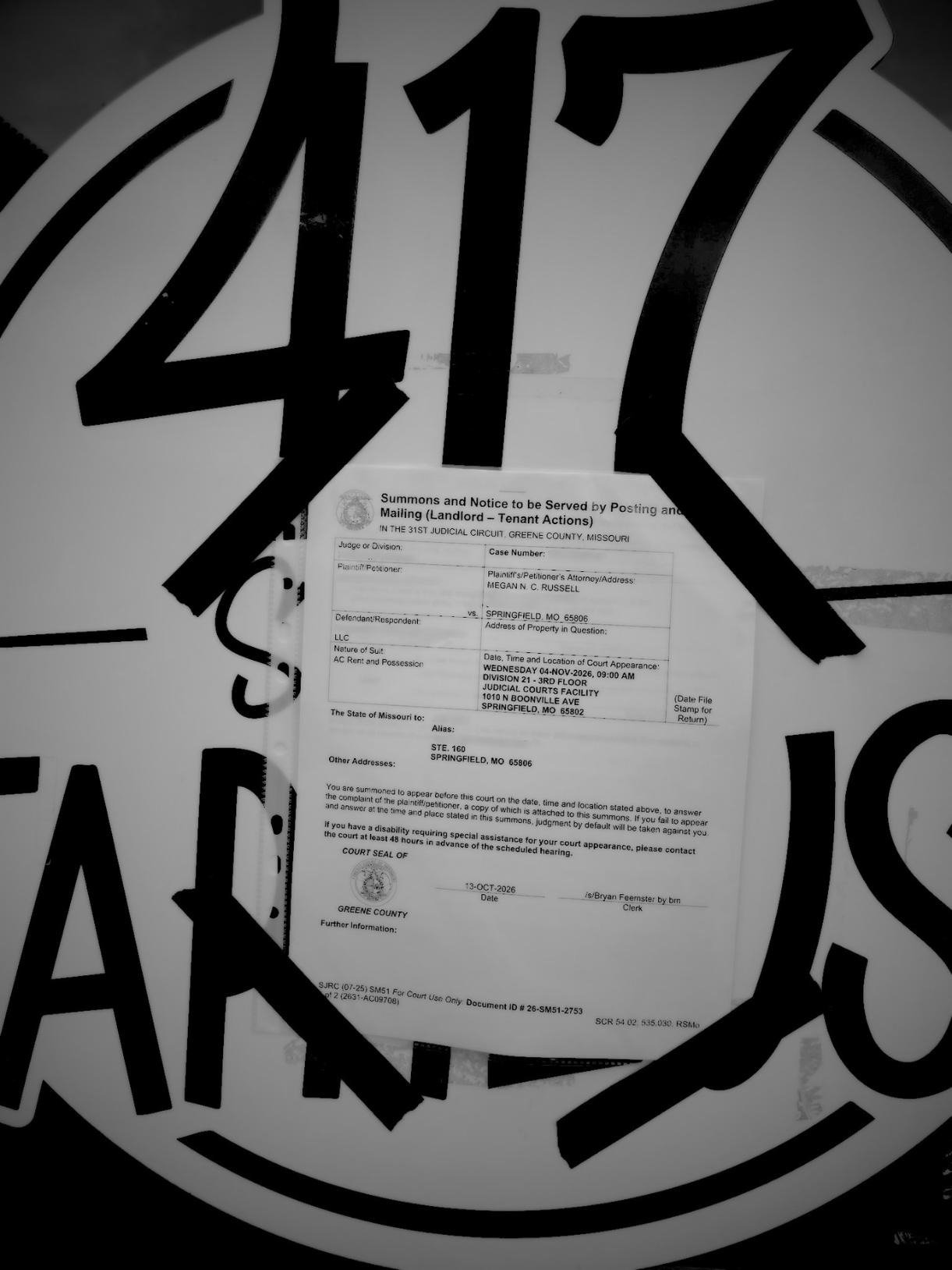
LOCKED OUT
A Report on Springfield, Missouri’s Eviction Crisis
Table of Contents
(click on a link to jump to that section)
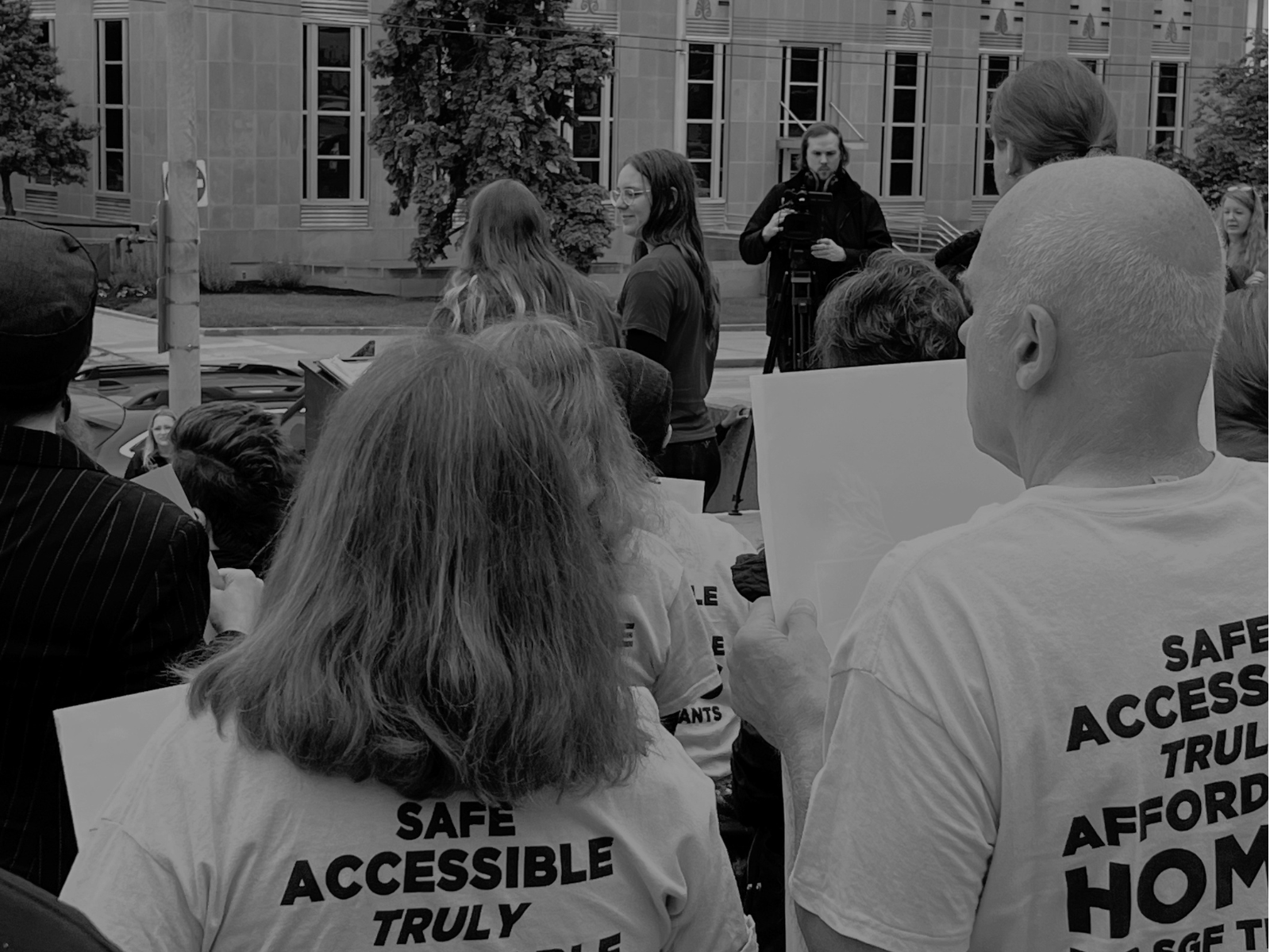
The annual public cost of one unsheltered adult at approximately $30,597 in policing, cleanup, municipal court fees, and medical expenses in Springfield.
Section VI: Recommendations
By examining data collected from Missouri CaseNet, Eviction Lab, and anecdotal evidence from STUN's Court Watch Program leaders and volunteers, it is clear that the rising rates of eviction cause significant strain on Springfield as a whole. While the current reality of this issue is bleak, other jurisdictions across the US have found that adopting Right to Counsel programs is an effective method for addressing eviction and its detrimental downstream outcomes. STUN offers six recommendations to City Council.
-
Pass an RTC ordinance providing full-scope legal representation to tenants at or below 80% of AMI facing eviction. The program should be administered by a Tenant Legal Services Coordinator, contracted through a competitive procurement process open to all eligible providers, include a triage framework that assigns service levels by need, and phase in over five years, from 252 tenants in year 1 to 1,260 at full implementation.
Rationale: In 141 of the 142 eviction court cases STUN volunteers observed, the tenant had no attorney. That gap is structural—even tenants who asked for counsel and received a continuance still appeared at the follow-up hearing without representation.
-
STUN strongly advocates for Springfield's Right to Counsel program to be funded through general revenue growth for the first two years and to seek sustainable, dedicated funding from an Affordable Housing Trust Fund or equivalent source dedicated for housing. Kansas City, Cleveland, Nashville, Louisville, and Toledo did not have surplus funds waiting—they made a choice to prioritize giving tenants access to the justice that is only possible with an attorney.Springfield can make the same choice.
Rationale: Toledo's experience shows both that a city can find the money and that annual appropriations are vulnerable to cuts: Toledo launched its program in 2022 with $250,000 annually, then reduced that allocation to $67,000 in April 2026, cutting its caseload from roughly 250 households a year to 98. A sustainable, dedicated funding source gives the program stability beyond a single budget cycle so Springfield does not repeat that outcome.
-
Establish a rental assistance component capped at one month's rent per household, approximately $98,000 in Year 1, within an $800,000 total, scaling with the caseload. Households with arrears beyond one month should be connected to other rental assistance programs where available, with the attorney coordinating the application.
Rationale: Cleveland's evaluation found that the absence of sufficient rent assistance makes it harder for attorneys to resolve cases that lack a strong legal defense.(36) Kansas City's ordinance links its RTC program to a $940,000 rental assistance fund for the same reason.(37)
-
Require any entity filing an eviction to provide written notice of the program to both tenant and property owner, with failure resulting in dismissal. Prohibit retaliation against tenants receiving representation—including failure to renew a lease, utility shutoffs, or charging the tenant the owner's filing fees unless included in a settlement or court order—with an administrative fine of no less than $1,000 per day per covered individual.
Rationale: A tenant who does not know the program exists cannot access it. As the court watch observed, tenants regularly appeared confused by the process; the tenants most likely to default are unlikely to have heard of the program through other channels.
-
Require the Tenant Legal Services Coordinator to report annually to City Council by September 1, including demographics, case outcomes, instances of serial filings on the same household, service-level distribution, client satisfaction, and annual expenditure estimates, published on the city's website. The report should also include an estimate of the local cost of rehousing a household after eviction.
The City should partner with local health, law enforcement, and social services agencies, especially those who primarily deal with low- and moderate-income households, to specifically collect data on evictions in their intake process. With partnerships over time, Springfield can monitor its progress preventing eviction and homelessness with rigorous data collection.
Rationale: Springfield currently has no systematic, published data on eviction case outcomes. Section III describes the CaseNet analysis STUN conducted to fill that gap, but it is a one-time analysis, not an ongoing data system. The reporting requirements and agency partnerships would generate the data needed to evaluate the program—including the serial filings data that Section I identifies as missing from public sources.
-
In alignment with Councilman Brandon Jenson's proposed RTC ordinance, STUN recommends program oversight by a committee of seven citizens, six of whom should be people who do not own real property or have a profit motive in housing. STUN further recommends a Tenant Legal Services Coordinator hired in the City legal department for the explicit purpose of supervising the implementation of Right to Counsel. The Coordinator will work with the contracted agents and committee members to make programmatic changes and annual public reports.
Rationale: The committee ensures accountability to the tenants the program serves. Placing the Coordinator in the legal department provides the infrastructure that guarantees a successful program consistent with how the ordinance defines representation.
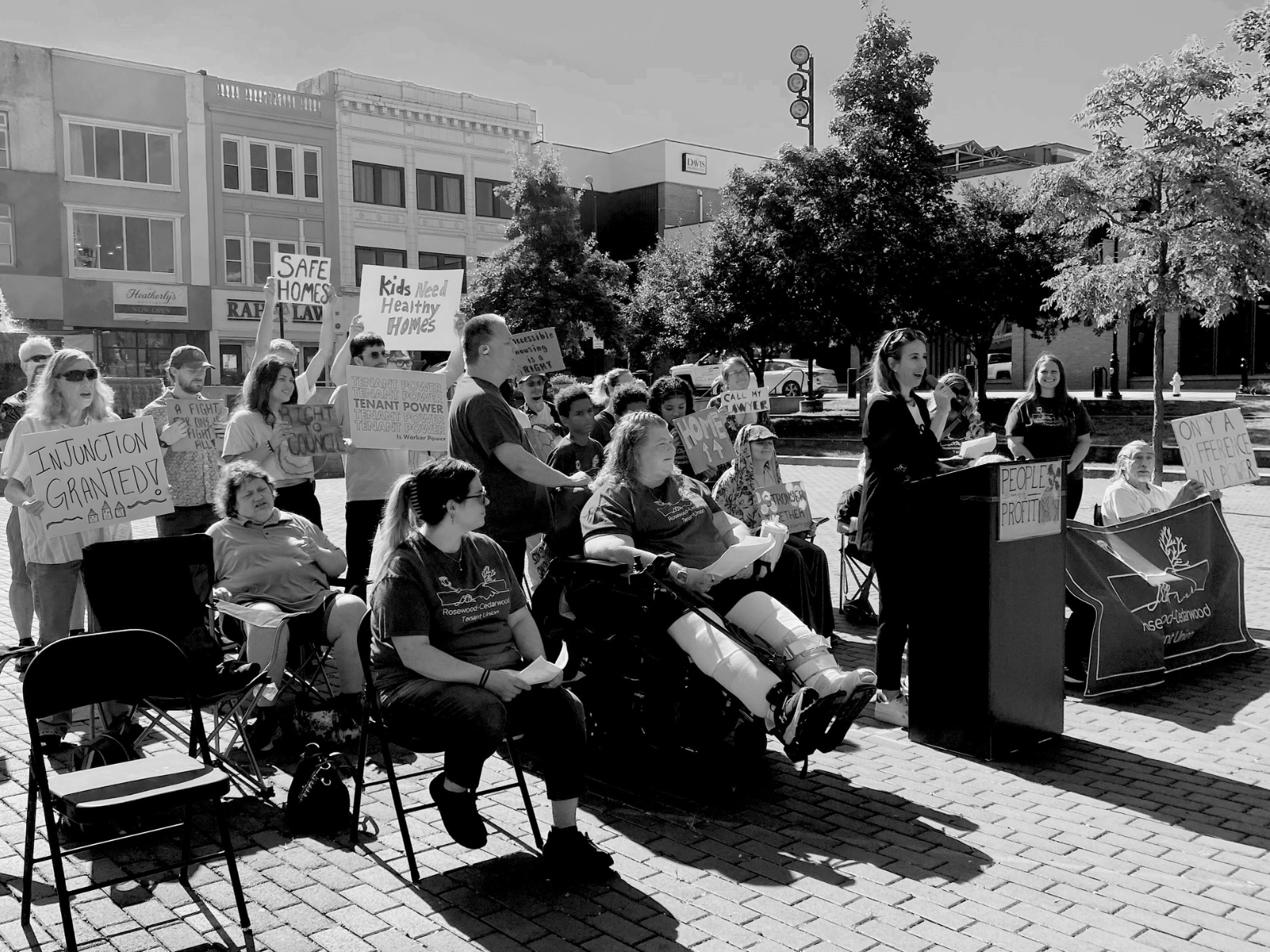
Ensuring a Right to Counsel for tenants is a proven, evidence-based program that lays the groundwork for comprehensively addressing eviction and its detrimental outcomes.
This report is the product of over two years of intensive research, coalition building, and organizing on STUN's part with the purpose of finding proactive solutions to the eviction and homelessness crises that continue to produce devastating effects in Springfield. While direct aid services serve a vital role in helping Springfieldians already experiencing the traumatic and damaging outcomes of housing instability, there has been a lack of resources allocated toward prevention for individual families and the community at large. If City leadership wishes to comprehensively address the repercussions of increasing homelessness and eviction rates, ensuring a Right to Counsel for tenants is a proven, evidence-based program that lays the groundwork for this positive systemic change.
Conclusion
- National Coalition for a Civil Right to Counsel, "All About the Tenant Right to Counsel in Kansas City" (2026), summarizing Yi Wang, Caitlin McMurtry & Hye-Sung Han, "Investigating the Impact of Kansas City's Tenant Right to Counsel Program on Eviction Court Outcomes," Journal of Urban Affairs (2026). https://civilrighttocounsel.org/major_developments/all-about-the-tenant-right-to-counsel-in-kansas-city/
- Stout, Stout's Independent Evaluation of the Cleveland Eviction Right to Counsel Program (January 2026). https://www.unitedwaycleveland.org/wp-content/uploads/2026/03/Stouts-2025-Independent-Evaluation-of-Clevelands-Eviction-Right-to-Counsel_FINAL_2026.01.29.pdf
- Legal Aid Society of Middle Tennessee and the Cumberlands, "Nashville's Eviction Right to Counsel program paid off, study finds" (April 13, 2026), summarizing Stout, Stout's Independent Evaluation of the Eviction Right to Counsel Pilot Program in Davidson County / Nashville (March 2026). https://las.org/nashvilles-eviction-right-to-counsel-program-paid-off-study-finds/.
- Rance Burger, "One homeless person costs Springfield more than $30K per year. There are at least 1,100," Springfield Daily Citizen, March 31, 2022. https://sgfcitizen.org/government/one-homeless-person-costs-springfield-more-than-30k-per-year-there-are-at-least-1100/
- Does each chronically homeless person cost taxpayers $30,000 to $50,000 per year?" Portland Press Herald, May 12, 2026. https://www.pressherald.com/2026/05/13/does-each-chronically-homeless-person-cost-taxpayers-30000-to-50000-per-year-fact-brief/
- STUN Court Watch data, May 19–September 1, 2026. See Section II for methodology
- U.S. Census Bureau, American Community Survey 2024 1-Year Estimates, Table B25003 (Tenure). Springfield has 42,595 renter-occupied units out of 76,851 total occupied housing units, or approximately 55.4%. https://data.census.gov/table/ACSDT1Y2024.B25003?g=160XX00US2970000
- Eviction Lab (Princeton University), Springfield Eviction Filing Overview (custom data request prepared by Sarah Johnson, March 13, 2026). https://springfield.sarahjohnson.io/
- STUN CaseNet analysis, June 2025–2026. See Section III for methodology.
- Wang, McMurtry & Han, Journal of Urban Affairs (2026). https://doi.org/10.1080/07352166.2026.2658609
- See note 8. Eviction Lab (Princeton University), Springfield Eviction Filing Overview (custom data request prepared by Research Specialist, Sarah Johnson, March 13, 2026). https://springfield.sarahjohnson.io/
- See note 7. U.S. Census Bureau, American Community Survey 2024 1-Year Estimates, Table B25003 (Tenure). Springfield has 42,595 renter-occupied units out of 76,851 total occupied housing units, or approximately 55.4%. https://data.census.gov/table/ACSDT1Y2024.B25003?g=160XX00US2970000
- See note 8. Eviction Lab (Princeton University), Springfield Eviction Filing Overview (custom data request prepared by Research Specialist, Sarah Johnson, March 13, 2026). https://springfield.sarahjohnson.io/
- Sum of zone-level filings from Eviction Lab data, 2020-2025. The 2020 total (1,659) is the sum of four zone figures.
- Lillian Leung, Peter Hepburn & Matthew Desmond, "Serial Eviction Filings: How Landlords Use the Courts to Collect Rent," Social Forces 100, no. 1 (2020): 316–345. Summary available at Eviction Lab, https://evictionlab.org/serial-eviction-filings/.
- See note 1. National Coalition for a Civil Right to Counsel, “All About the Tenant Right to Counsel in Kansas City” (2026), summarizing Yi Wang, Caitlin McMurtry & Hye-Sung Han, “investigating the Impact of Kansas City’s Tenant Right to Counsel Program on Eviction Court Outcomes,” Journal of Urban Affairs (2026). https://civilrighttocounsel.org/major_developments/all-about-the-tenant-right-to-counsel-in-kansas-city/
- City of Kansas City, Missouri, Housing and Community Development Department, Right to Counsel Program Annual Report required by Ordinance 211067 (September 1, 2025) https://www.kcmo.gov/home/showpublisheddocument/16144/639038260806930000
- Eviction Lab (Princeton University), Springfield MO Top Evictors, April 2025-March 2026 (CVS file provided by Sarah Johnson, April 8, 2026)
- Missouri Courts, "Access Justice Center" (Legal Services of Southern Missouri). https://www.courts.mo.gov/file.jsp?id=31027
- NCCRC, “All About the Tenant Right to Counsel in Kansas City”. note 1 above.
- Stout, Stout's Independent Evaluation of the Cleveland Eviction Right to Counsel Program (January 2026). The $2.47 ROI figure and 85% displacement-avoidance rate are for the period July 2020–December 2025. https://www.unitedwaycleveland.org/wp-content/uploads/2026/03/Stouts-2025-Independent-Evaluation-of-Clevelands-Eviction-Right-to-Counsel_FINAL_2026.01.29.pdf
- Stout, Stout's Independent Evaluation of the Eviction Right to Counsel Pilot Program in Davidson County / Nashville (March 2026), as summarized by Legal Aid Society of Middle Tennessee and the Cumberlands. https://las.org/nashvilles-eviction-right-to-counsel-program-paid-off-study-finds/. In 2025, of 1,069 clients assisted, approximately 48% received counsel and advice, 38% received extended services, and 13% received limited action. The 93% displacement-avoidance rate applies to the extended-services group.
- National Coalition for a Civil Right to Counsel, "All About Louisville's Eviction Right to Counsel" (October 2025). https://civilrighttocounsel.org/major_developments/all-about-louisvilles-eviction-right-to-counsel/
- National Coalition for a Civil Right to Counsel, "All About Toledo's Right to Counsel for Tenants Facing Eviction" (February 2023), citing Toledo Blade (first-year figures); WTVG, "Legal aid program strained as evictions rise in Toledo" (October 13, 2026) (funding cut and 2026 caseload figures). https://civilrighttocounsel.org/major_developments/all-about-toledos-right-to-counsel-for-tenants-facing-eviction/
- Stout, Stout's Independent Evaluation of the Cleveland Eviction Right to Counsel Program (January 2026), note 21 above.
- Stout, Stout's Independent Evaluation of the Eviction Right to Counsel Pilot Program in Davidson County / Nashville (March 2026), note 22 above.
- Kansas City, Missouri, Ordinance 250902 (October 23, 2025), https://clerk.kcmo.gov/LegislationDetail.aspx?ID=7704502&GUID=3478689A-8F26-4899-99DD-44A7ADD1E02C
- Ibid.
- Stout, Stout's Independent Evaluation of the Cleveland Eviction Right to Counsel Program (January 2026), note 21 above.
- U.S Department of Housing and Urban Development, FY2026 Fair Market Rents for Springfield, MO MSA. https://www.huduser.gov/portal/datasets/fmr/fmrs/FY2026_code/2026state_summary.odn?inputname=MO&statename=Missouri&statefp=29&year=2026&fmrtype=Final
- Rance Burger, "One homeless person costs Springfield more than $30K per year. There are at least 1,100," Springfield Daily Citizen, March 31, 2022. https://sgfcitizen.org/government/one-homeless-person-costs-springfield-more-than-30k-per-year-there-are-at-least-1100/
- Robert Collinson, John Eric Humphries, Nicholas Mader, Davin Reed, Daniel Tannenbaum & Winnie van Dijk, "Eviction and Poverty in American Cities," Quarterly Journal of Economics 139, no. 1 (2024): 57–120. https://academic.oup.com/qje/article/139/1/57/7276608.
- Shichao Tang et al., "Are Home Evictions Associated with Child Welfare System Involvement?" Child Maltreatment 29, no. 1 (2024): 66–81.
- "Southwest Missouri's foster care crisis needs your help," Springfield News-Leader, April 19, 2026. https://www.news-leader.com/story/opinion/2026/04/19/casa-volunteers-needed-missouri-foster-children-opinion/89636283007/
- Collinson et al., Quarterly Journal of Economics (2024), note 33 above.
- Stout, Stout’s Independent Evaluation of Cleveland Eviction Right to Counsel Program (January 2026), note XX above
- Kansas City, Missouri, Ordinance 250902 (October 23, 2025), note XX above.
Citations
ACKNOWLEDGMENTS
This report would not have been possible without the efforts of policy expert Vee Sanchez of Empower Missouri, and STUN Data Lead Johnathan Byrd and Court Watch Organizer Elle Fabro, who collected and analyzed data from CaseNet as well as led STUN’s Court Watch Team. STUN Communications Team leaders Andrew Cole, Max Prater, and Paige Spindler-Richardson as well as Communications Organizer Blythe Spindler-Richardson were essential to the final design of both the print and web versions of the report, and STUN Lead Organizer Sarah Barnts provided insightful feedback throughout the process.
We also extend gratitude to RTC campaign mentor John Pollock, Staff Attorney for the Public Justice Center and Coordinator of the National Coalition for a Civil Right to Counsel (NCCRC), Lucas Caldwell-McMillan who assisted with budget research, as well as Research Specialist Sarah Johnson and Research Collaborator Peter Hepburn of The Eviction Lab at Princeton University for their groundbreaking work creating data for Springfield’s eviction crisis.