

Tenant Power Takes Center Stage in New York City
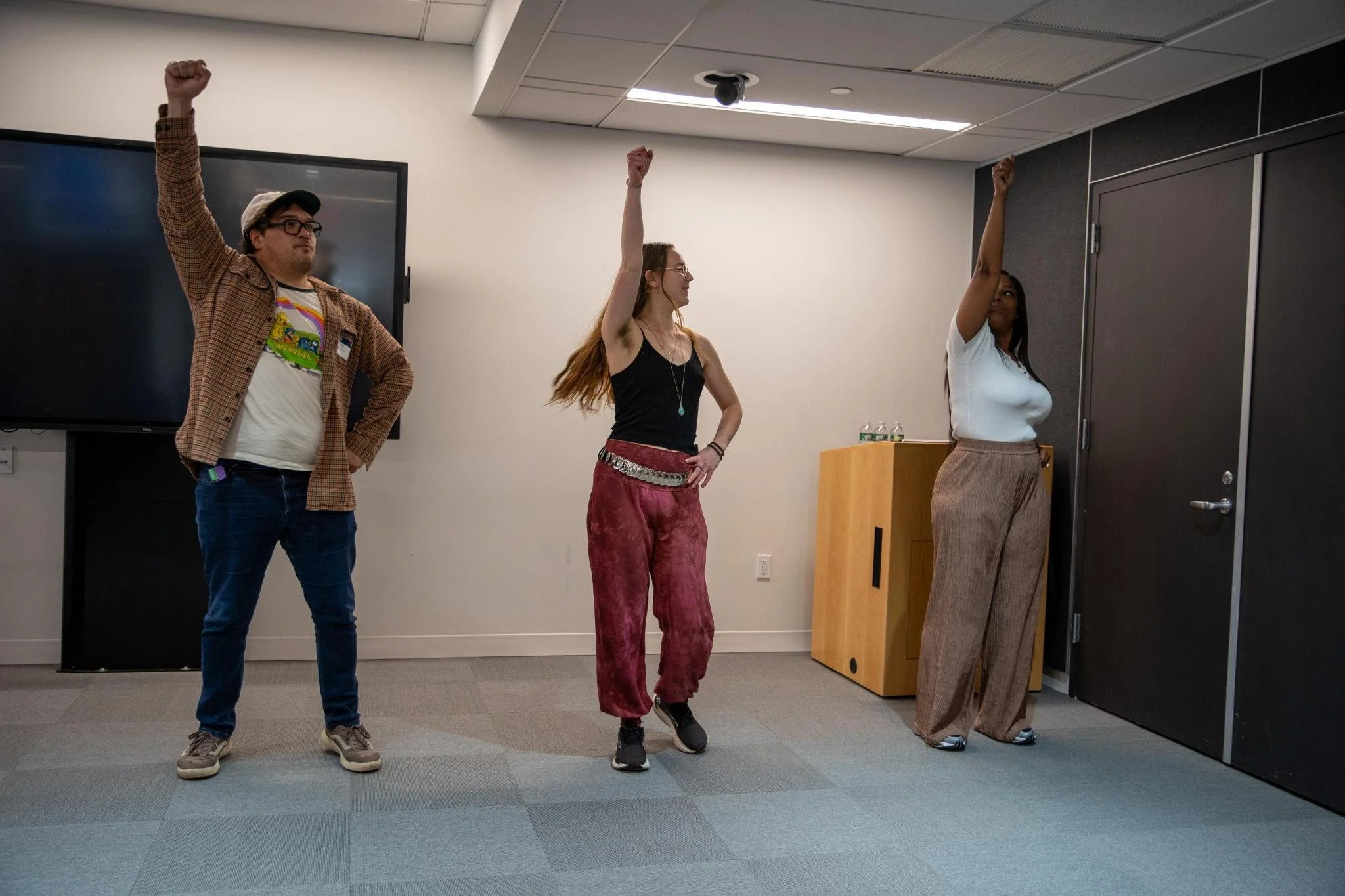
Rex and Sarah practicing tenant cheerleading with a new organizer friend at the Tenant Power + Policy Conference in New York City. Photo courtesy HouseUS.
Tenant leaders, organizers, and policy experts from across the country gathered in New York City for the Tenant Power and Policy Conference, hosted by HouseUS and the Center for Racial Justice and Equitable Futures at Cornell University. The convening brought together nationally recognized leaders in the housing justice movement—people rooted in the daily fight for safe, stable homes and committed to building a future where housing is treated as a human right. Among those present were Springfield Tenants Unite leaders Sarah Barnts (they/them) and Rex Ybañez (genderless).
From the opening panel, one message was unmistakable: tenants are not powerless, and they are no longer organizing in isolation. In the “Welcome to New York” panel, speakers including Safi Fernandes, Sumathy Kumar, Emma Rehac, Tracy Rosenthal, and facilitator Cea Weaver shared stories of organizing that have transformed fear and displacement into collective power. From building-level tenant associations to citywide unions, tenants are taking on corporate landlords, resisting displacement, and winning real concessions — even in the face of foreclosure, harassment, and coordinated attempts to divide communities.
Panelists spoke candidly about the scale of the crisis and the urgency of the moment. Corporate landlords continue to extract wealth through rising rents, hidden fees, and predatory practices, while targeting Black and brown communities for displacement. Yet, organizers emphasized that these same conditions are fueling a new wave of tenant solidarity. Across languages, neighborhoods, and boroughs, tenants are building relationships strong enough to sustain coordinated action — from door-to-door organizing and mutual aid networks to mass meetings and public campaigns that demand accountability from those in power currently.
In sessions like “Bubbles and Balloons,” speakers connected these lived experiences to a broader economic reality: housing has been transformed into a financial asset, and inequality is driving the crisis. Corporate actors are expanding their reach into both market-rate and “affordable” housing, reshaping entire communities in the process. But rather than accepting this system as fixed, participants focused on how collective action can disrupt it—challenging predatory practices, exposing corporate tactics, and advancing policies rooted in justice and equity.
Closing the conference, Jamila Michener reflected on three guiding principles: purpose, practice, and possibility. In a moment defined by crisis, tenant leaders left with something more powerful than analysis — they left with a shared commitment to fight, build, and shape the future together. Throughout the conference, one truth grounded every conversation: organizing is about people. It is about neighbors knocking on each other’s doors, showing up to meetings after long workdays, sharing food, and choosing solidarity over isolation. It is about building trust strong enough to take risks together and to win lasting change.