

TRAPPED IN THE SYSTEM: Elvester Kennedy's Fight for Dignity and Housing Justice
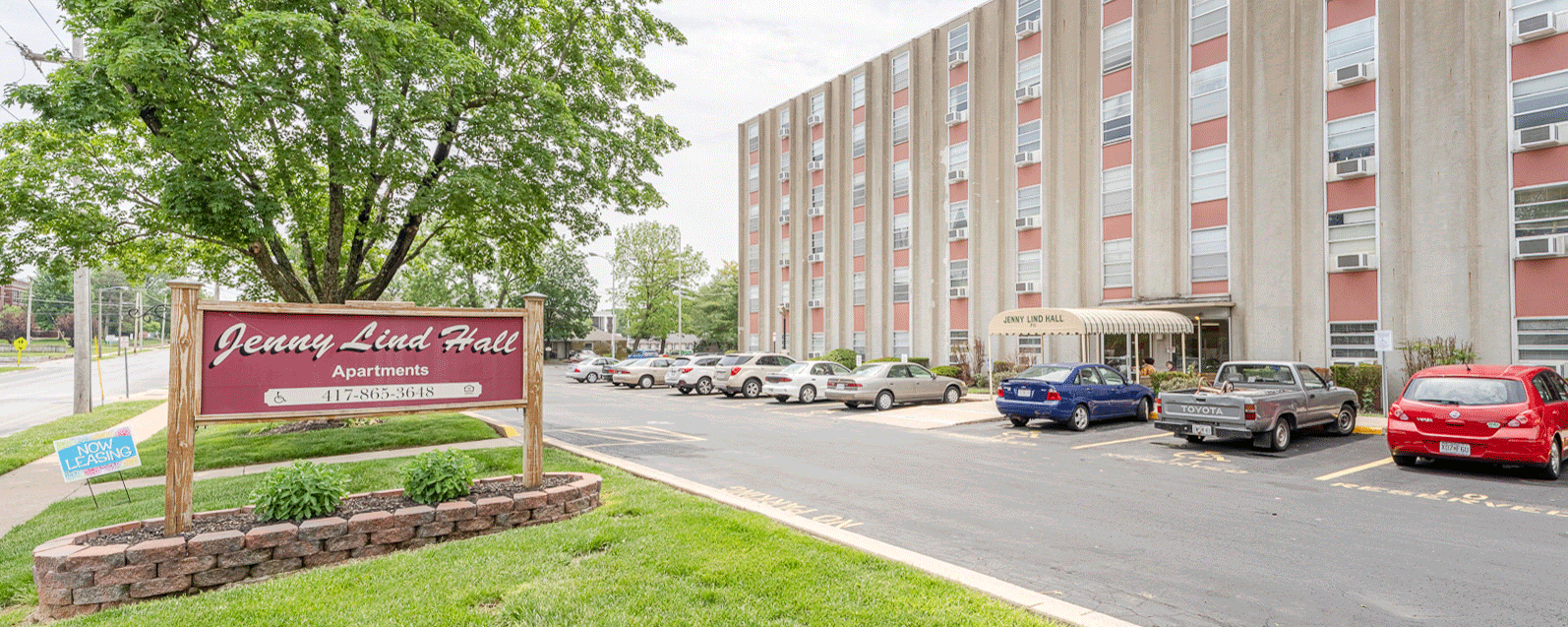
Conditions continue to go unaddressed at the long-embattled Jenny Lind Hall. Photo from https://jennylindhall.com/.
Elvester Kennedy spent 30 years as a dedicated chef at the Marriott Hotel in Springfield, Missouri. A man of skill and pride, he crafted meals for countless guests, building a life through hard work and personal responsibility. But today, retired and wheelchair-bound, Elvester is engaged in a different kind of battle — a fight for basic human dignity, safety, and housing rights in a system that seems to have forgotten him.
After his last marriage ended, Elvester began life as a renter and left the house to his ex-wife. Two years later, former football injuries from high school and college left him using a wheelchair. As his mobility declined, he urgently needed accessible housing and was placed in Jenny Lind Hall (JLH), a government-subsidized complex managed by Millennia Housing Management. The transition was stark — Elvester went from being a proud homeowner who handled his own repairs to living in a building where basic upkeep was out of his control. From the start, life at JLH felt like a nightmare.
A Place of Despair
"The elevators have never worked properly," Elvester recalls. "The frequent breakdowns were more than an inconvenience — they were a prison sentence. One elevator had been out of order permanently, while the other functioned sporadically at best."
For a wheelchair user, this meant missing doctor's appointments, community events, and even the ability to get groceries. Trapped in his apartment, Elvester's world shrank to the size of his small, rundown unit.
"I pay my rent on time, and I deserve better," he says. But the building's administration and maintenance teams have been unhelpful, and despite countless complaints, the problems persist. "It's like they don't care if we live or die in here."
Health Problems and Isolation
Elvester's health has been steadily declining since moving to Jenny Lind. The constant stress of living in an unsafe, inaccessible home, combined with missing critical doctor's appointments, took a toll on his physical and mental well-being.
"It messed with my mental health big time," he admits. "I had to be hospitalized because I couldn't make it to my appointments."
His hospitalization in late June 2024 was a turning point. EMTs had to carry him down the stairs of the five-story building because neither elevator was functioning. He spent a month in the hospital recovering, only to be sent to a motel on Springfield's south side, far from the community he'd grown accustomed to. Worse still, the motel was not accessible to people with disabilities, making everyday tasks like bathing and moving around even more difficult.
Despite these hardships, Elvester remains determined. He speaks with a quiet strength, his voice carrying the weight of years of frustration. "I've worked hard all my life. I've paid my dues. I don't deserve to be treated like this."
A Legacy of Advocacy
Before his relocation, Elvester had become a leader among the tenants of Jenny Lind Hall. He was a voice for those too afraid to speak out, those who feared retaliatory evictions or other consequences for bringing attention to the hazardous conditions they were forced to endure.
"I think many people are scared to speak up," he says. "They don't trust the management or the government to help. All we get is lip service. It hurts to see people in charge, like government officials, come and visit, say they're going to help, and then do nothing. Do they really care about us, or do they just want our vote?"
Millennia has a reputation for neglecting its properties. Elvester and others in the building have dealt with broken windows, mold, holes in the ceilings, pest infestations, and peeling paint. The lack of basic repairs has left him feeling not only physically vulnerable but emotionally drained. This sense of betrayal runs deep. "It's an injustice that people are still in Jenny Lind, still dealing with the same issues!"
A Call for Justice
Elvester's situation is not unique. Across Springfield and beyond, low-income tenants in government-subsidized housing face similar challenges. They live in fear of eviction, retaliation, and worsening conditions, all while trying to survive in an economy that increasingly prices them out of safe and affordable housing.
"I want justice," Elvester declares. "I want everyone to have safe, accessible, affordable housing. People shouldn't have to worry about being late on rent because they're trying to make it to their doctor's appointment or buy groceries."
He knows that without action, more people will face homelessness, or worse. "I'm afraid that too many people will go homeless or die before anything changes. It's not fair how they treat us. I feel hopeless sometimes," he admits. "But I believe in the fight. I believe in Springfield Tenants Unite. We're going to make a difference."
The Fight Continues at Jenny Lind Hall
In 2026, Jenny Lind Tenants won a major victory. On February 14, residents of Jenny Lind Hall rode a working elevator for the first time in two years. For the wheelchair users, elderly tenants, and anyone with mobility challenges, it meant more than convenience — it meant freedom. Freedom to see a doctor. Freedom to buy groceries. Freedom to simply leave their homes.
The elevator is working. But the fight is not over. Tenants are still demanding full accessibility, proper maintenance, and true accountability from Millennia. What the victory at Jenny Lind proves is simple: when tenants stand together, things can change.
Though his capacity is now limited, Elvester remains active with STUN, continuing to advocate for change with the support of his aide and Jai Byrd, a fellow leader in the tenant movement. His final message is clear: "We deserve better. And I'm not giving up."